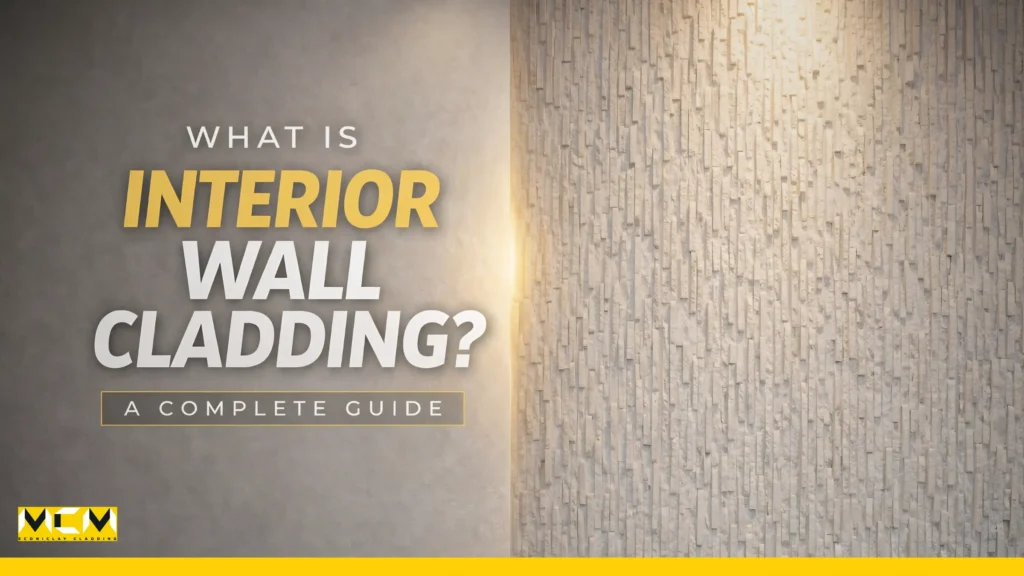

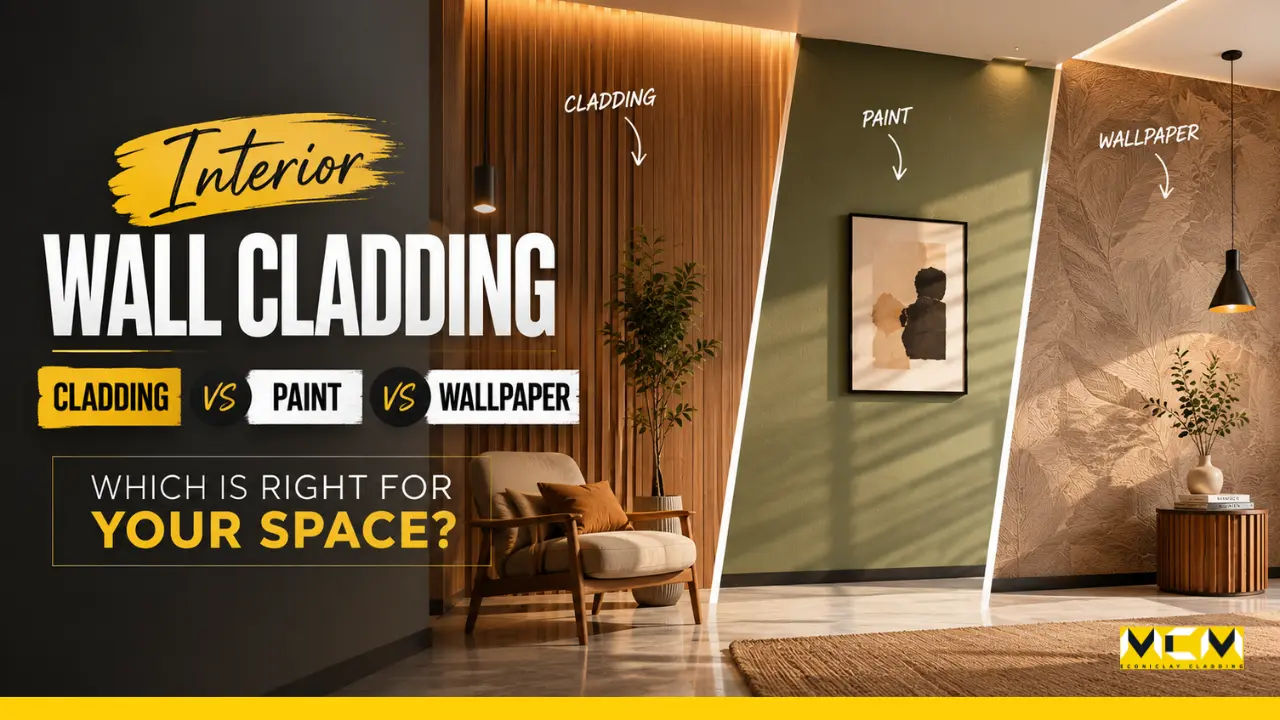
Walk into a well-designed space, and the walls will tell you everything.
Not loudly. Not obviously. But in how they catch light, how they age, how they hold the room together.
And that’s the shift.
Walls are no longer just something you finish.
They are something you design with.
For decades, the decision was straightforward—paint or wallpaper. Both did the job. Both still do. But today, that choice feels incomplete, especially in spaces where interiors are expected to do more than just look presentable.
This is where interior wall cladding enters the conversation.
Not as a trend. Not as an upgrade.
But as a different category altogether.
The Real Question Designers Are Asking Today
The comparison between paint, wallpaper, and cladding is often framed as a matter of cost or aesthetics.
But that’s not how designers think about it anymore.
The question has shifted from:
👉 “What should this wall look like?”
to
👉 “What role should this wall play in the space?”
Because each option behaves differently—not just visually, but physically, over time.
Paint: The Default That Still Works
Paint is still the most widely used interior finish—and it probably always will be.
It’s fast, flexible, and forgiving. It allows you to reset a space without rebuilding it. For large areas where the wall is meant to stay quiet, paint does exactly what it should:
It steps back.
But that’s also its limitation.
Paint doesn’t carry depth. It doesn’t age gracefully in high-use environments. It doesn’t interact with light in any meaningful way. Over time, it begins to show wear—scuffs, fading, inconsistencies.
And in spaces where walls are meant to contribute—not just exist—paint starts to feel insufficient.
Wallpaper: Expression Without Substance
Wallpaper brought personality back into interiors.
Pattern, texture, storytelling—it allowed designers to create impact without adding construction complexity. A wall could change character overnight.
In hospitality and residential interiors, this still holds value.
But wallpaper, like paint, remains a surface decision.
It creates visual richness, but not material depth. It performs well in controlled environments—but struggles where durability matters.
Moisture, wear, and maintenance become concerns. And over time, it reveals its temporary nature.
Wallpaper expresses.
But it doesn’t endure in the same way.
Interior Wall Cladding: A Shift in How Walls Are Designed
Cladding changes the nature of the wall itself.
Instead of applying something onto a surface, you introduce a material layer—something that has weight (even if minimal), texture, and presence.
This is where the conversation shifts from decoration to architecture.
With interior wall cladding, the wall begins to:
- hold light differently
- create depth without relying on illusion
- contribute to how the space is perceived
It doesn’t just look finished.
It feels resolved.
The Difference Is Not Visual—It’s Behavioral
At first glance, all three options can look compelling.
But the real difference reveals itself over time.
Paint fades.
Wallpaper ages unevenly.
Cladding settles in.
This is why designers working on:
- hospitality spaces
- premium residences
- commercial interiors
increasingly lean toward materials that can withstand time and use.
Because in these environments, walls are not passive. They are constantly interacting—with people, light, and movement.
Material Depth vs Surface Treatment
There’s a subtle distinction that often gets overlooked.
Paint and wallpaper simulate variation.
Cladding contains it.
A painted wall is uniform by design.
A clad wall is intentionally irregular—through texture, grain, or material layering.
This is why traditional materials like:
have always been associated with more grounded, tactile interiors.
They bring authenticity.
But they also bring challenges.
The Trade-Off Designers Have Always Faced
Natural materials come with consequences.
Stone adds weight.
Wood demands maintenance.
Brick limits flexibility.
Which means designers often find themselves negotiating between:
- what they want visually
- and what is practical to execute
This is where many projects settle for paint or wallpaper—not because they’re ideal, but because they’re easier.
But that compromise is becoming less acceptable in more considered interiors.
The Shift Toward Smarter Interior Cladding Materials
What’s changing today is not just preference—it’s possibility.
Newer interior wall cladding materials are being developed to carry the visual richness of natural materials without inheriting their limitations.
This includes mineral-based and modified clay surfaces, which allow for:
- textured finishes
- earthy tones
- material depth
while remaining:
- lightweight
- adaptable
- easier to install
They don’t try to replicate stone or wood perfectly.
They reinterpret them.
And that distinction matters.
So What Do Designers Actually Prefer?
Not one over the other.
That’s the wrong way to look at it.
Good interiors are layered.
- Paint is used where the wall should recede
- Wallpaper is used where expression is needed
- Cladding is used where the wall needs to anchor the space
The preference is not about replacing materials.
It’s about assigning them the right role.
And increasingly, that role is becoming more defined.
Where ITTIMI Fits Into This Conversation
In this evolving material landscape, solutions like ITTIMI by MCM Cladding (MCM Phomi India) begin to make sense—not as alternatives to everything, but as answers to specific constraints.
ITTIMI operates within the category of modified clay-based interior wall cladding.
What that means in practice is simple:
It allows designers to introduce material depth—the kind you associate with stone or textured surfaces—without:
- adding significant weight
- complicating installation
- or limiting design flexibility
This makes it particularly relevant in projects where:
- execution timelines are tight
- surfaces are not perfectly uniform
- consistency across spaces matters
It’s not about replacing traditional materials.
It’s about making that material language more usable in modern interiors.
The Real Decision Isn’t Material—It’s Intent
At this point, the comparison between paint, wallpaper, and cladding becomes less useful.
Because the decision is not about which one is better.
It’s about understanding what the wall is expected to do.
Is it meant to disappear?
Is it meant to communicate?
Or is it meant to hold the space together?
Each material answers that differently.
Final Thought
The way we design walls is changing.
Not dramatically. Not all at once. But steadily.
As interiors become more thoughtful, more layered, more aware of how spaces are experienced—not just seen—the role of materials becomes more precise.
Paint will always exist.
Wallpaper will always have its place.
But interior wall cladding is no longer a niche choice.
It’s becoming the point where interiors stop being decorated—and start being designed.
And that’s a shift worth paying attention to.