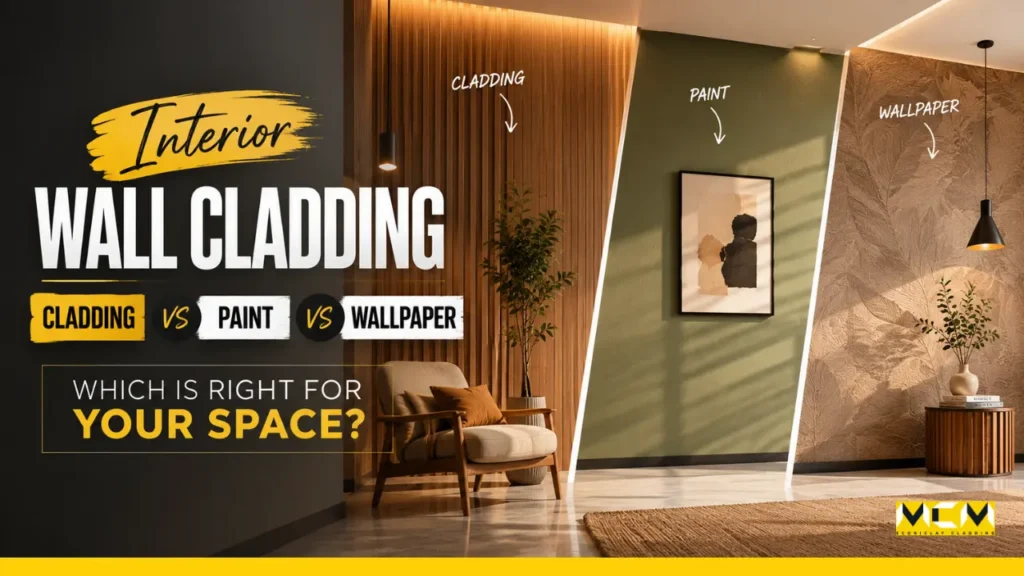

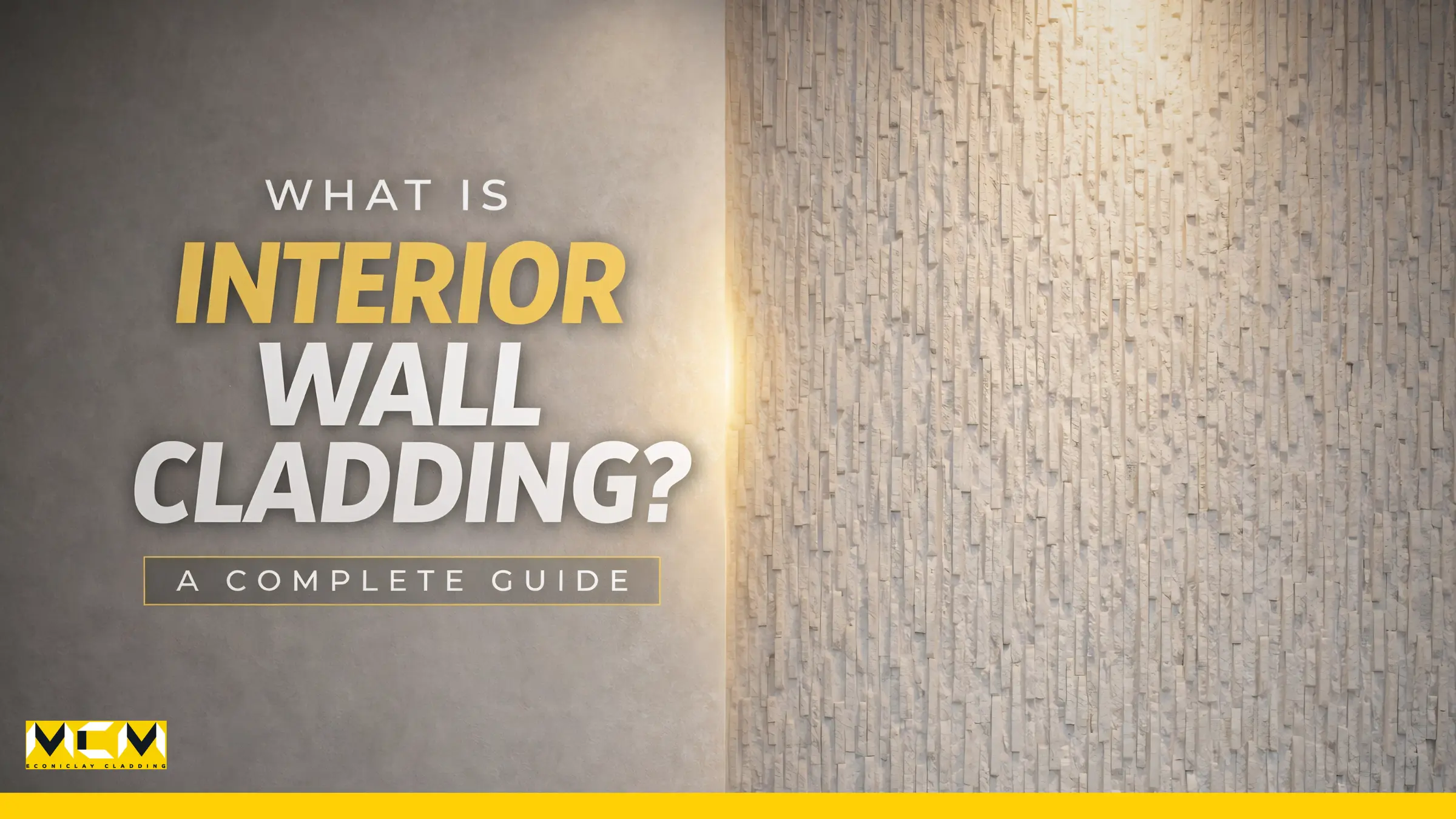
There’s a certain point in any interior where the walls start to feel… insufficient. They hold colour, yes. They define boundaries. But they don’t quite participate in the space. They sit there — flat, predictable, finished too quickly. That’s usually when the idea of interior wall cladding begins to make sense.
Not as an upgrade. Not even as a design feature. But as a shift in how walls are allowed to exist.
When a Wall Stops Being a Surface
At its simplest, interior wall cladding is just an added layer — a material applied over an internal wall.
But that definition is almost misleading.
Because what really changes is not the wall itself, but how we perceive it.
A painted wall reflects light.
A clad wall interacts with it.
Light doesn’t just bounce off — it catches, settles, breaks across texture. The surface begins to carry depth. And suddenly, the wall is no longer just a boundary. It becomes part of the spatial experience.
That shift — from flatness to presence — is what cladding actually does.
Why Paint Eventually Falls Short
Paint works because it is efficient.
It’s fast, it’s flexible, it allows change. But it also has limits — not in performance alone, but in expression.
After a point, paint can only do so much.
It cannot absorb the wear of high-traffic spaces without showing it. It cannot introduce texture without relying on illusion. And it rarely contributes to the atmosphere of a space beyond colour.
Which is why in more considered interiors — hospitality spaces, retail environments, even contemporary homes — walls are expected to do more than just “finish”.
They are expected to hold character.
And that’s where interior cladding begins.
Not Decoration, but Material Presence
There’s a tendency to think of wall cladding as decorative — something added to make a space look richer.
But the more accurate way to see it is this:
Cladding allows a wall to carry material intent.
Whether it’s the quiet warmth of wood, the grounded feel of stone, or the refined neutrality of mineral surfaces, the wall begins to communicate something more than colour.
It becomes tactile. It becomes layered. It begins to age differently.
And importantly, it begins to matter.
The Quiet Difference Between Panelling and Cladding
This is where language gets blurred.
Wall panelling is often about pattern and composition — frames, grids, symmetry. It’s applied, almost like furniture attached to a wall.
Cladding feels more integral.
It doesn’t sit on the wall. It becomes the wall’s surface logic. It’s less about arrangement, more about continuity.
That difference is subtle, but it changes how a space is read.
Materials, and What They Bring With Them
Every material used in interior wall cladding carries more than just a visual quality. It carries behavior.
Wood brings warmth, but also sensitivity. It responds to humidity, it marks, it requires care.
Stone brings presence. It anchors a space visually, but even internally, it adds weight — not always structural, but perceptual. It can dominate if overused.
Laminates and synthetic panels bring efficiency. They are controlled, consistent, easy to apply. But they often remain surfaces — they don’t quite cross into material experience.
And then there are newer materials — the ones that don’t sit neatly in any of these categories.
A Shift Toward More Adaptable Surfaces
What’s interesting in contemporary interiors is not just what materials are being used, but how they are expected to behave.
Designers today are working with:
- tighter timelines
- more complex geometries
- higher expectations of durability
- and a need for consistency across spaces
Traditional materials can do some of this — but not all.
Which is why there’s a growing interest in mineral-based and clay-based interior cladding. Not because they replace wood or stone, but because they offer a different balance.
They carry a sense of natural texture — but without the same weight or maintenance concerns. They adapt more easily to surfaces that are not perfectly flat. And they allow interiors to retain a material quality without becoming difficult to execute.
This is less about innovation for its own sake, and more about responding to how interiors are actually being built today.
Where Interior Cladding Actually Matters
One of the mistakes often made with cladding is overuse.
When everything is clad, nothing stands out.
The role of interior wall cladding is not to cover space — it’s to define moments within it.
A wall behind a reception desk.
A surface that anchors a living room.
A transition zone between spaces.
These are the places where cladding works best — where the wall needs to do more than just exist quietly in the background.
Where ITTIMI Comes Into the Picture
Within this shift, solutions like ITTIMI by MCM Cladding (Phomi MCM India) begin to feel relevant — not because they claim to replace traditional materials, but because they sit comfortably between them.
They carry a certain natural quality — not an imitation of stone or wood, but a surface that feels grounded. At the same time, they behave differently. They are lighter, more adaptable, and easier to work with in interior conditions.
Which means the designer doesn’t have to choose between:
- material richness
- and practical execution
The two can coexist.
And in many projects, that balance is what makes the difference between an idea that looks good on paper — and one that actually works in reality.
The Real Question Is Not “What Material?”
It’s easy to approach interior cladding as a selection process.
Wood or stone. Panel or surface. Matte or textured.
But the more useful question is:
What does this wall need to do?
Does it need to hold attention?
Does it need to withstand use?
Does it need to connect spaces?
Or simply support them quietly?
Once that is clear, the material choice becomes less about preference — and more about alignment.
Final Thought
Interior wall cladding is not about making a space look finished.
It’s about allowing surfaces to carry intention.
Because the difference between a good interior and a memorable one is rarely in the furniture, or the lighting, or even the layout.
It’s often in the surfaces —
in how they catch light,
in how they age,
in how they feel when you move through the space.
And sometimes, the wall is where that story begins.
Frequently Asked Questions
Interior wall cladding, wood cladding, stone cladding, and mineral-based cladding systems for modern interiors.
Interior wall cladding is a material layer applied over internal walls to enhance texture, depth, and durability. Unlike paint, it allows walls to interact with light and become part of the spatial experience.
Paint is efficient but limited in expression. Interior cladding design introduces texture, durability, and material presence, making it more suitable for spaces where walls need to contribute to the atmosphere.
Common wall cladding materials include wood cladding, stone cladding, laminates, and mineral-based cladding systems, each offering different performance and aesthetic qualities.
Wall panelling focuses on patterns and composition, while interior wall cladding creates a continuous material surface that feels more integrated with the architecture.
Wood cladding adds warmth and natural appeal to interiors. However, it can be sensitive to humidity and requires maintenance over time.
Stone cladding brings strong visual presence and material depth. It works well as a focal surface but should be used carefully to avoid overwhelming a space.
Yes, modern interior cladding materials such as modified clay cladding systems offer natural textures with lower maintenance and better adaptability.
Mineral-based cladding systems use natural materials like clay to create textured interior surfaces, offering flexibility, lightweight construction, and durability.
Interior wall cladding is best used in focal areas such as feature walls, reception zones, and living spaces where the wall needs to create visual impact.
Choosing the right interior wall cladding material depends on durability, maintenance, and design intent. The material should align with how the space is used and experienced.