
The façade is one of the most visible and technically critical elements of any building. It defines architectural identity, protects the structure from environmental exposure, and plays a significant role in durability, maintenance, and long-term operational costs.
Yet, facade cladding decisions are often made based on short-term priorities – appearance, initial cost, or familiarity with traditional materials; rather than long-term performance.
The result? Premature deterioration, safety risks, expensive maintenance, and facades that fail to perform as intended.
As modern architecture moves toward lighter structural systems, faster construction timelines, and more sustainable materials, selecting the right facade cladding system requires a deeper understanding of material behavior, installation methods, and lifecycle performance.
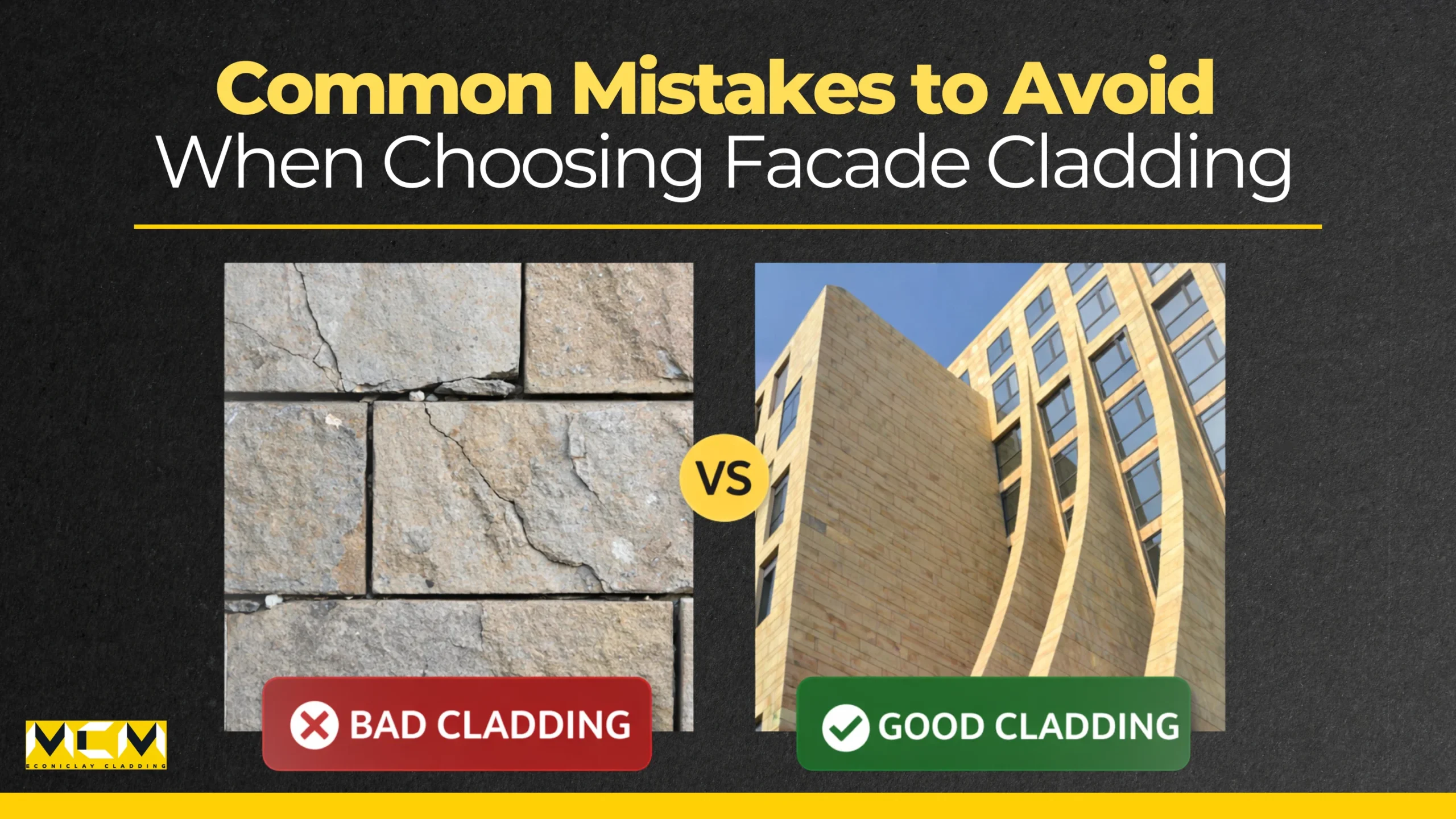
This guide explores the most common mistakes to avoid when choosing facade cladding, and what architects and developers should consider instead.
Why Facade Cladding Decisions Matter More Than Ever.
Unlike interior finishes, facade cladding is exposed to constant environmental stress:
- Heat and UV radiation
- Rain and humidity
- Temperature fluctuations
- Wind pressure
- Pollution
Poor cladding choices don’t just affect appearance; they can compromise durability, safety, and building performance.
In many cases, facade problems emerge not immediately, but years after installation, when repair becomes costly and disruptive.
Avoiding these mistakes early can significantly extend a building’s lifespan.
Mistake 1: Choosing Cladding Based Only on Appearance.
Architecture is visual, and façade materials play a major role in defining a building’s identity. However, selecting cladding based purely on aesthetics is one of the most common and costly mistakes.
Materials that look impressive at installation may not perform well over time.
For example:
- Certain coatings may fade under UV exposure
- Artificial finishes may lose texture or discolor
- Some materials weather unevenly
Natural mineral-based materials and clay-based facade systems tend to age more gracefully because their color and texture are intrinsic; not surface-applied.
What to consider instead:
- How the material ages over time
- Whether the color is natural or surface-coated
- Long-term visual consistency
Facade cladding should maintain its architectural integrity not just for years; but decades.
Mistake 2: Ignoring Material Weight and Structural Load
Weight is one of the most overlooked factors in facade design.
Heavy cladding materials such as natural stone or thick ceramic panels increase the dead load on the building. This affects:
- Structural design
- Installation complexity
- Safety risk over time
In high-rise buildings or renovation projects, excessive cladding weight can create long-term structural stress.
Lightweight facade cladding systems reduce:
- Load on the structural frame
- Installation risk
- Long-term safety concerns
This is one reason modern construction increasingly favors lightweight mineral-based cladding over traditional heavy stone systems.
Mistake 3: Overlooking Long-Term Maintenance Requirements
Initial cost often receives more attention than lifecycle cost. But facade maintenance can quickly exceed the original installation cost if the wrong material is selected.
Some facade materials require:
- Regular repainting
- Sealing
- Replacement of damaged panels
- Intensive cleaning
Others are more resistant to environmental exposure and require minimal upkeep.
When evaluating cladding, consider:
- Maintenance frequency
- Cost of repairs
- Ease of replacement
Low-maintenance facade systems reduce operational costs significantly over time.
Mistake 4: Choosing Materials That Lack Flexibility.
Modern architecture increasingly incorporates:
- Curved facades
- Fluid geometries
- Non-linear surfaces
Rigid cladding materials such as stone or thick ceramic panels can limit design possibilities and increase installation complexity.
They often require:
- Custom cutting
- Additional support systems
- More labor time
Flexible cladding systems allow architects to achieve complex forms without compromising structural efficiency.
This flexibility is particularly valuable in contemporary architectural design and renovation projects.
Mistake 5: Ignoring Climate and Environmental Conditions.
Facade cladding performs differently depending on climate.
Materials must withstand:
- High heat
- Heavy rainfall
- UV exposure
- Humidity
Some materials expand and contract significantly under temperature changes, causing cracks or detachment over time.
Others may fade or degrade under constant sunlight.
Mineral-based and modified clay facade materials perform well in varied climates due to their natural composition and stability.
Always consider the local climate when selecting cladding materials.
Mistake 6: Prioritizing Low Initial Cost Over Lifecycle Value.
Budget constraints are real, but selecting the cheapest facade material often results in higher long-term costs.
Lower-cost materials may lead to:
- Frequent repairs
- Shorter lifespan
- Higher maintenance costs
- Premature replacement
Facade cladding should be evaluated based on lifecycle cost, not just initial expense.
A durable facade system can significantly reduce total ownership cost.
Mistake 7: Not Considering Installation Efficiency.
Some cladding materials require:
- Heavy lifting equipment
- Complex anchoring systems
- Skilled specialized labor
This increases:
- Installation time
- Labor cost
- Project delays
Lightweight cladding systems allow faster installation and reduce project timelines.
This is particularly important in commercial projects where construction speed affects overall cost.
Mistake 8: Using Materials Unsuitable for Renovation Projects.
Many buildings undergo facade renovation after decades of use.
Heavy cladding materials may not be suitable for retrofit applications because existing structures may not support additional weight.
Lightweight facade cladding is often preferred for renovation because it minimizes structural impact while modernizing appearance.
Facade renovation is one of the fastest-growing segments in modern construction, making material selection even more critical.
Mistake 9: Ignoring Safety Considerations.
Facade safety is a major concern, especially in urban environments.
Heavy cladding panels that detach can pose serious risks.
Material selection should consider:
- Weight
- Installation method
- Long-term adhesion or anchoring reliability
Lightweight cladding systems reduce the risk associated with detachment simply due to lower mass.
Safety should always be a primary consideration; not an afterthought.
Mistake 10: Choosing Materials That Limit Future Design Adaptability.
Buildings often evolve over time. Future renovations, additions, or modifications may require adaptable facade systems.
Rigid and heavy materials can limit future flexibility.
Modern facade systems designed with flexibility and lightweight construction allow easier upgrades and modifications.
This future-proofing approach is increasingly important in contemporary architecture.
The Shift Toward Lightweight, Mineral-Based Facade Cladding.
These challenges have driven innovation in facade materials.
Architects and developers are increasingly adopting:
- Lightweight cladding systems
- Mineral-based facade materials
- Modified clay cladding technology
These materials combine:
- Natural texture
- Structural efficiency
- Flexibility
- Durability
Modified clay facade materials, developed through advanced manufacturing processes, offer the visual authenticity of natural materials without the structural challenges associated with heavy stone.
Modern Clay-Based Cladding and Architectural Efficiency.
One of the most important innovations in recent years has been the development of modified clay facade cladding.
This material uses natural clay and mineral components engineered into thin, flexible sheets suitable for exterior applications.
Key characteristics include:
- Significantly lower weight compared to stone
- Natural mineral composition
- Flexibility for curved surfaces
- Reduced structural load
- Improved installation efficiency
This allows architects to achieve natural architectural finishes while maintaining structural efficiency.
What Architects and Developers Should Prioritize Instead.
When selecting facade cladding, focus on long-term performance rather than short-term convenience.
Evaluate materials based on:
- Structural efficiency
How much load the material adds to the building. - Durability
Resistance to environmental exposure. - Maintenance requirements
Expected upkeep over decades. - Installation efficiency
Ease and speed of application. - Design flexibility
Ability to accommodate modern architectural forms. - Lifecycle value
Total cost over the building’s lifespan.
How Modern Modified Clay Cladding Addresses These Challenges.
Innovative facade systems such as those developed by MCM Cladding, based on modified clay technology, were designed specifically to address the limitations of traditional facade materials.
These systems combine:
- Natural clay and mineral composition
- Lightweight construction
- Flexible sheet format
- Durable exterior performance
This makes them particularly suitable for:
- Contemporary architectural facades
- High-rise buildings
- Renovation projects
- Curved or complex surfaces
Rather than replacing traditional materials entirely, these systems expand the range of possibilities available to architects and developers.
Conclusion: The Right Facade Cladding Is a Long-Term Decision.
Facade cladding is not simply a finishing material – it is a critical architectural system that influences durability, safety, maintenance, and performance.
The most common mistakes, choosing materials based solely on appearance, ignoring structural load, or prioritizing short-term cost, can lead to long-term challenges.
Modern architecture requires facade materials that balance:
- Structural efficiency
- Durability
- Flexibility
- Sustainability
Advancements in mineral-based and modified clay facade technologies, including systems developed by MCM Cladding and PHOMI MCM INDIA, reflect the evolution of facade engineering toward safer, lighter, and more adaptable solutions.
Ultimately, the best facade cladding is not just the one that looks right on day one, but the one that continues to perform reliably for decades.
Frequently Asked Questions
Key considerations, common mistakes, and expert insights on selecting the right facade cladding system.
Common mistakes include choosing facade cladding based only on appearance, ignoring material weight, overlooking maintenance, and prioritizing low initial cost over long-term performance.
While aesthetics matter, exterior wall cladding must perform under environmental stress. Materials that look good initially may fade or deteriorate over time.
Heavy materials increase structural load and risk, whereas lightweight cladding systems improve safety, efficiency, and long-term performance.
Lifecycle cost includes maintenance and durability. Choosing the right cladding system helps reduce long-term expenses and improves building performance.
Flexible materials allow application on complex surfaces, making modern facade design more adaptable and efficient.
Materials must withstand heat, UV, and humidity. Choosing the right facade cladding materials ensures durability in varying climates.
Yes, lightweight facade cladding is ideal for renovation as it reduces structural load and simplifies installation.
MCM cladding is a modified clay-based material that offers flexibility, lightweight construction, and natural textures for modern architectural facades.