

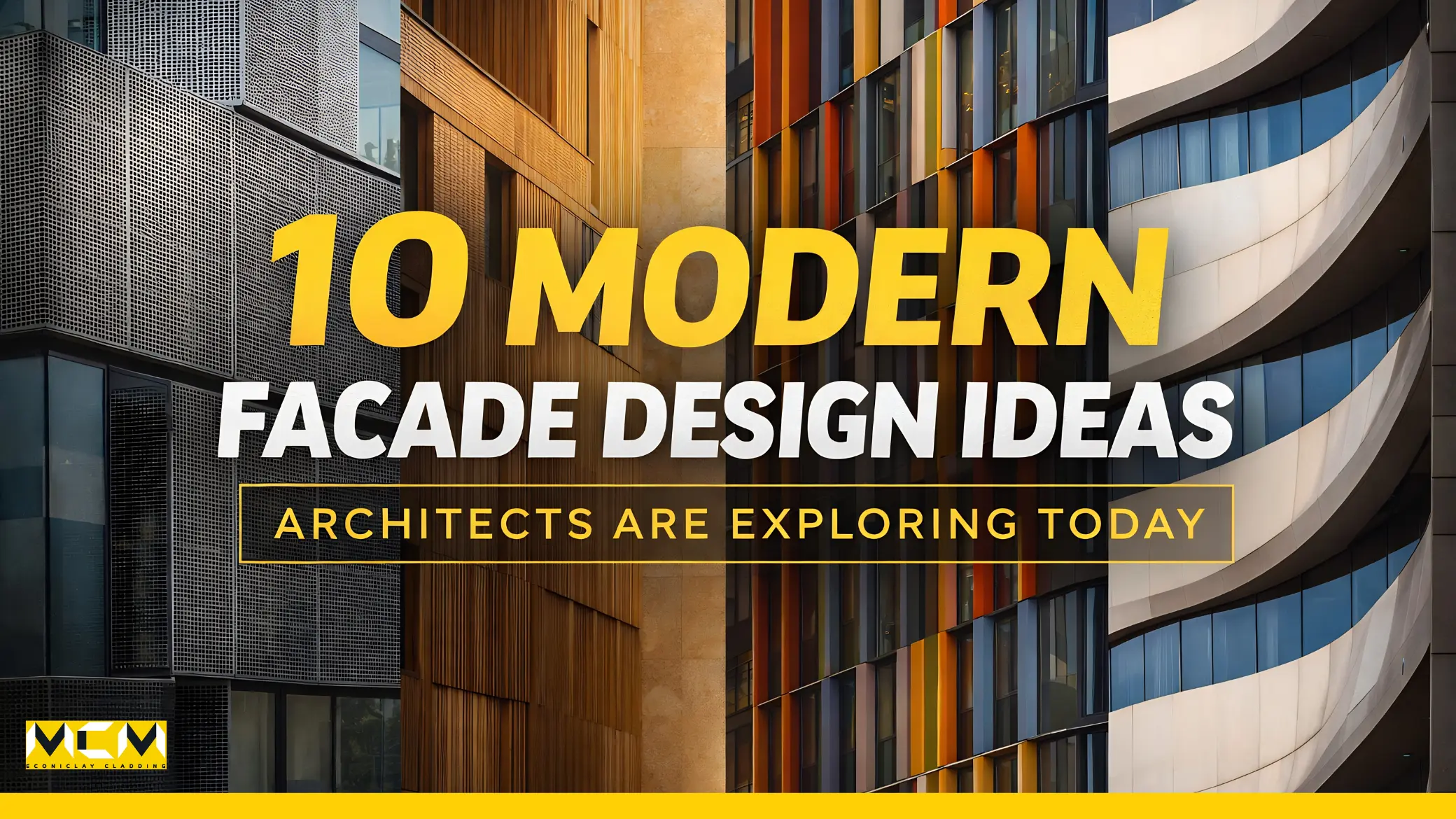
Architecture rarely gets a second chance to make a first impression.
Before someone steps inside, the facade has already communicated scale, intent, and material thinking. In contemporary architecture, facade cladding design is no longer a surface decision — it’s where performance, material behavior, and identity come together.
Today’s facades are not driven by trends alone. They are shaped by how buildings respond to climate, how materials behave over time, and how construction realities influence design.
Below are ten facade design approaches that are actively being explored across modern residential and commercial architecture — not just as ideas, but as practical directions.
1. White Minimalist Facade
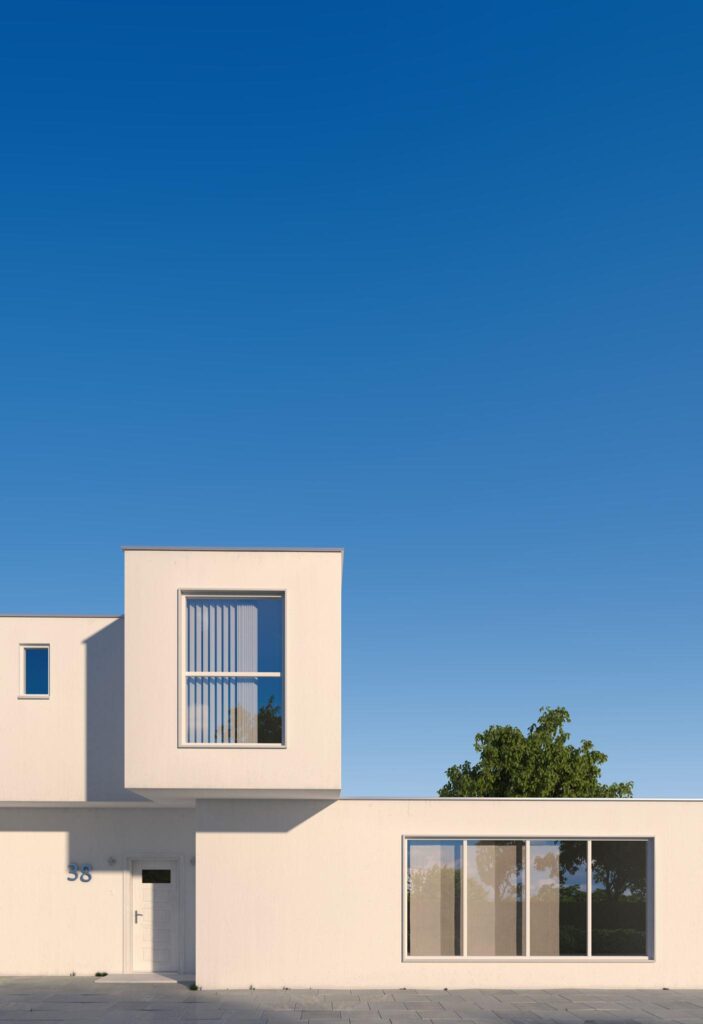
A clean white facade continues to be one of the most widely explored approaches in modern design.
These facades rely on simple geometry, sharp edges, and controlled openings rather than material complexity. The absence of visual noise allows proportion and shadow to define the building.
Large glass openings are often introduced to soften the mass and bring in natural light, creating a balance between solidity and openness.
This approach works particularly well in urban residences and villas where clarity and calmness are key.
2. Dark Monolithic Facade
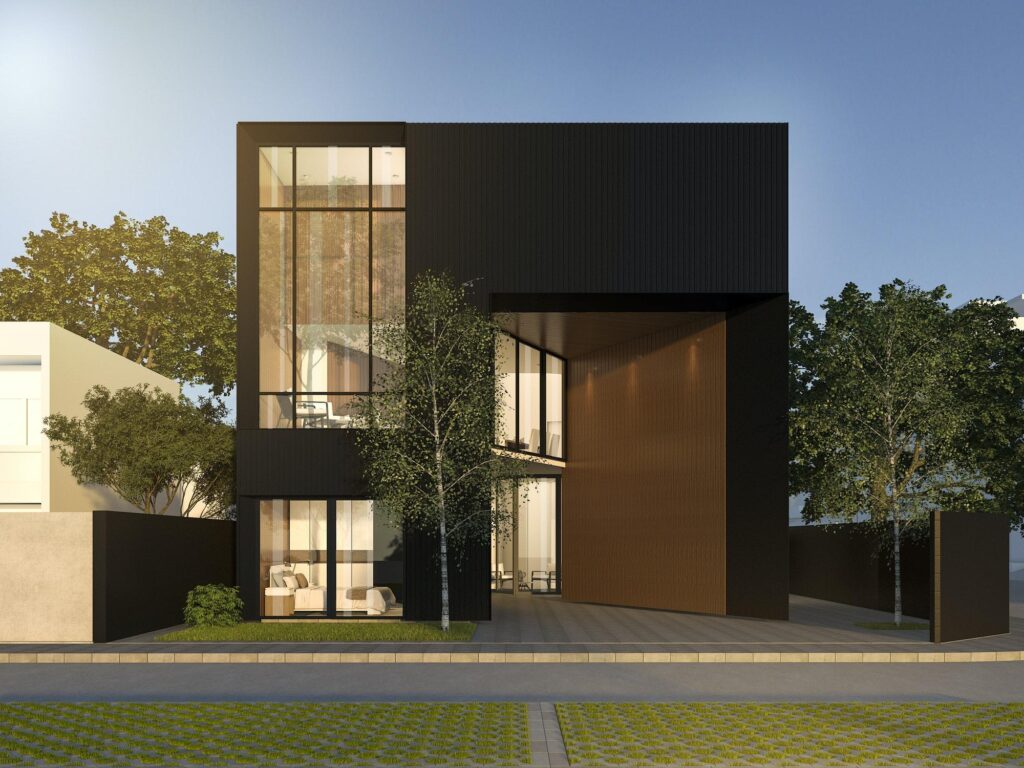
Dark facades — often achieved using black timber, dark metal panels, or matte finishes — create a strong, singular presence.
Unlike lighter facades, these surfaces absorb light, which enhances contrast and highlights edges and volumes.
Vertical lines or subtle textures are often introduced to avoid flatness, giving the facade rhythm without breaking its monolithic character.
This approach is commonly seen in contemporary homes where architects want the building to feel bold, grounded, and minimal at the same time.
3. Stone-Clad Facade
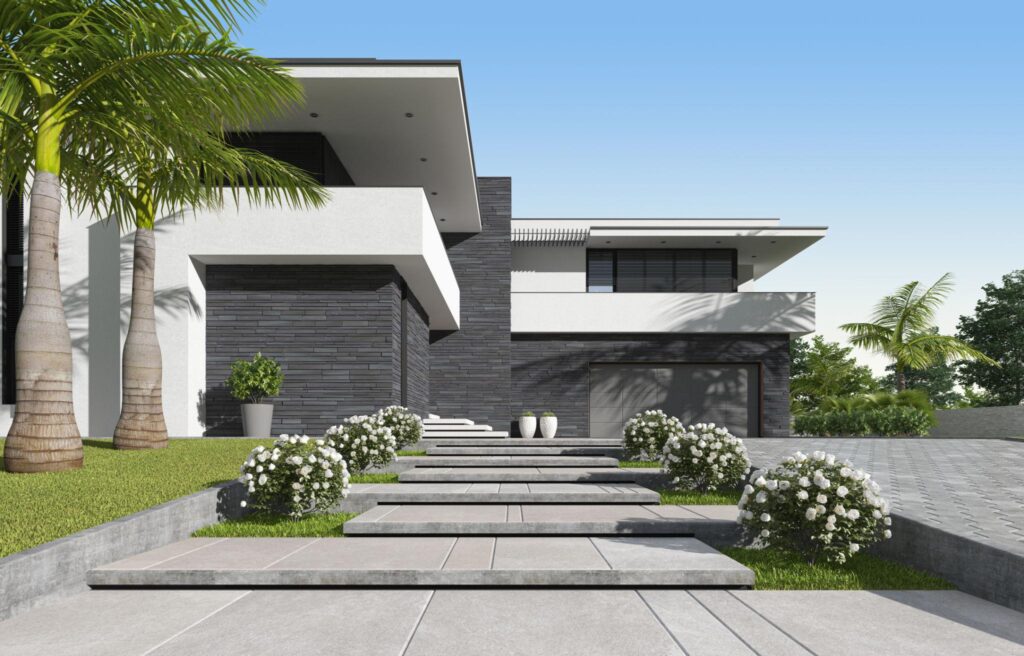
Natural stone continues to be used where buildings need to feel connected to their context.
Stone facades bring:
- texture
- durability
- and a sense of permanence
They are especially effective in hillside homes, resort architecture, and projects surrounded by natural landscapes.
However, in modern applications, stone or stone cladding is rarely used across the entire facade. Instead, it is often combined with lighter materials to balance weight, cost, and execution complexity.
4. Glass-Dominant Facade
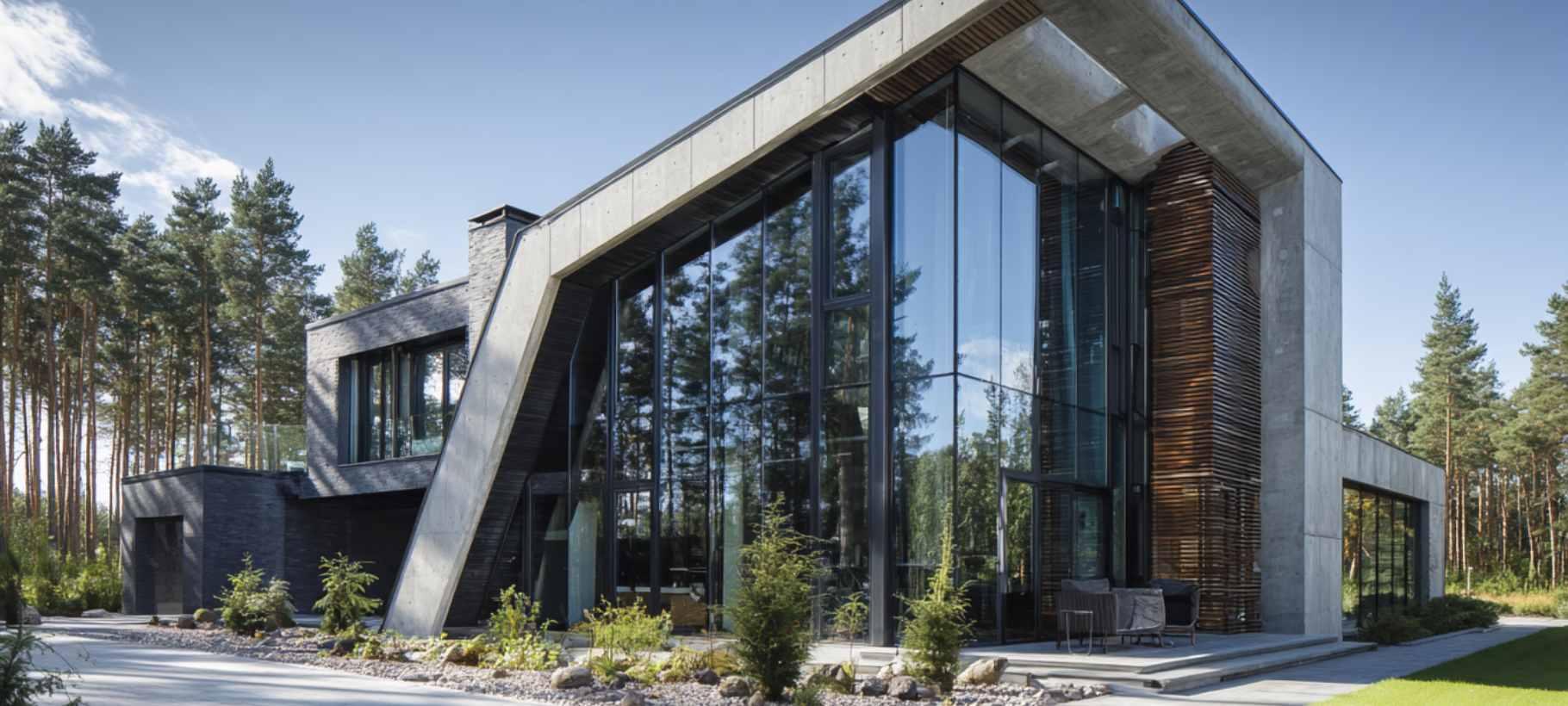
Glass-heavy facades are widely used in contemporary homes and commercial buildings to maximize openness and views.
Full-height glazing, corner windows, and curtain wall systems create a strong connection between interior and exterior spaces.
To manage heat gain and privacy, these facades are often combined with:
- shading devices
- secondary screens
- or recessed openings
The result is not just transparency, but controlled exposure to light and environment.
5. Corten Steel Facade
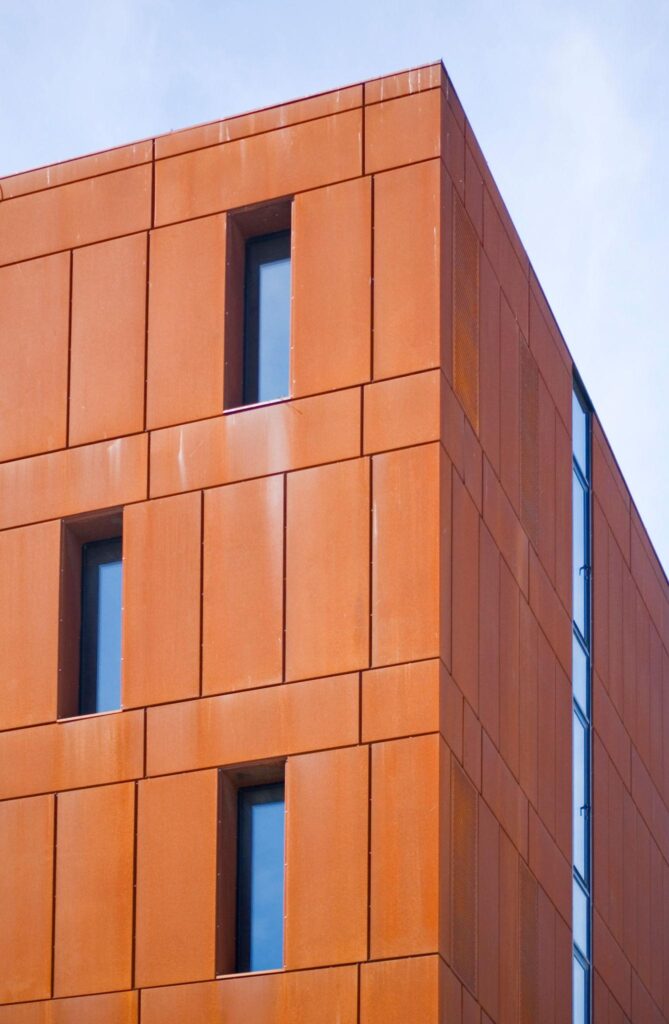
Corten steel introduces a distinct material identity.
Its weathered surface evolves over time, creating warm, earthy tones that change with exposure. This makes the facade dynamic rather than static.
Panel joints and sharp geometry are often used alongside corten to maintain a clean architectural language.
This approach is particularly suited for projects that aim for a raw, industrial, yet refined expression.
6. Timber Screen Facade
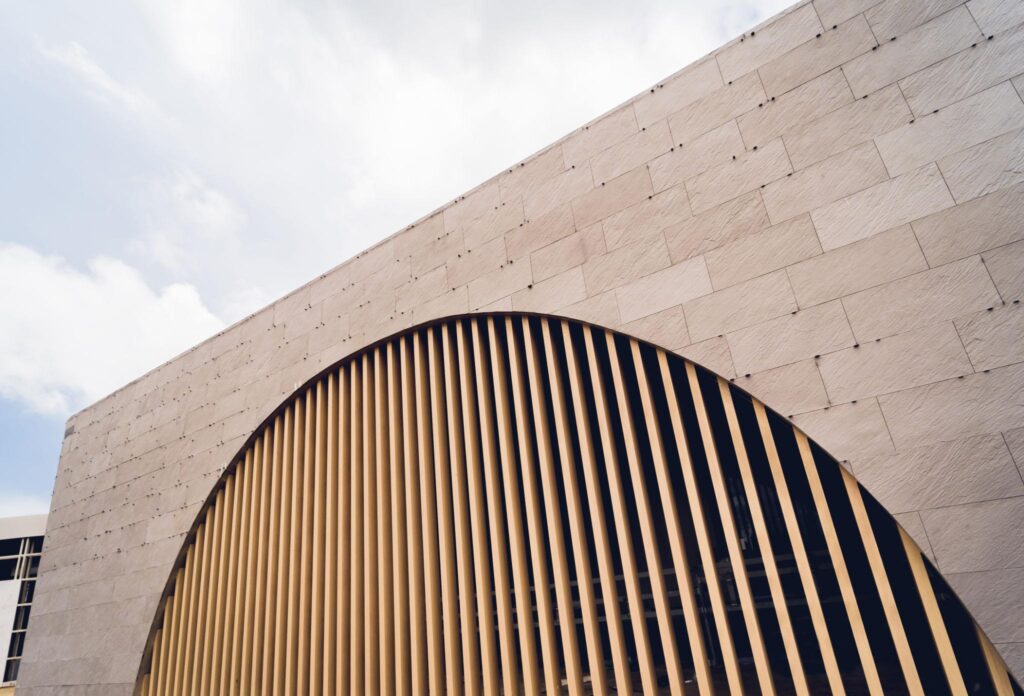
Timber screens are increasingly used as an additional layer over the primary facade.
Vertical or horizontal slats create a semi-transparent surface that filters sunlight while allowing ventilation.
This system improves:
- thermal comfort
- privacy
- and visual depth
At the same time, wood introduces warmth — making it ideal for residential and hospitality projects.
7. Vertical Timber Cladding
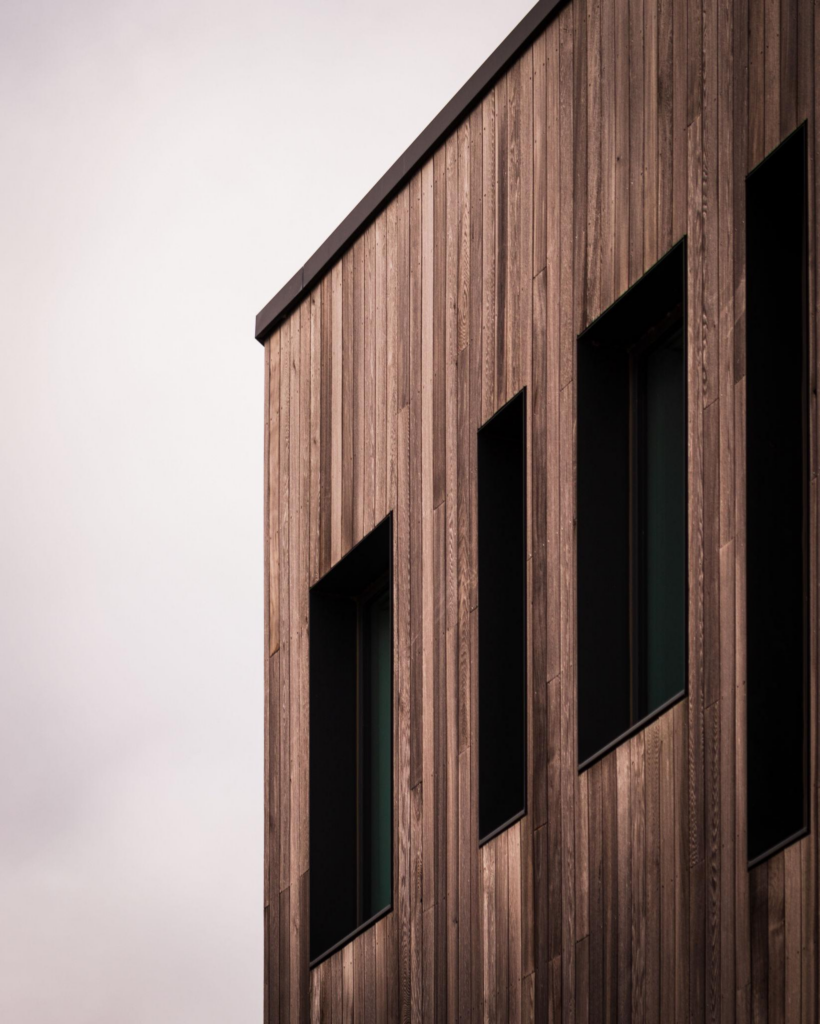
Unlike timber screens, vertical timber cladding is applied directly to the facade.
Tall wooden planks emphasize verticality and create a consistent rhythm across the building.
This approach works well for:
- contemporary homes
- nature-integrated designs
- Scandinavian-inspired architecture
Light interacting with the gaps and grain of wood creates subtle variation throughout the day.
8. Perforated Metal or Mesh Facade
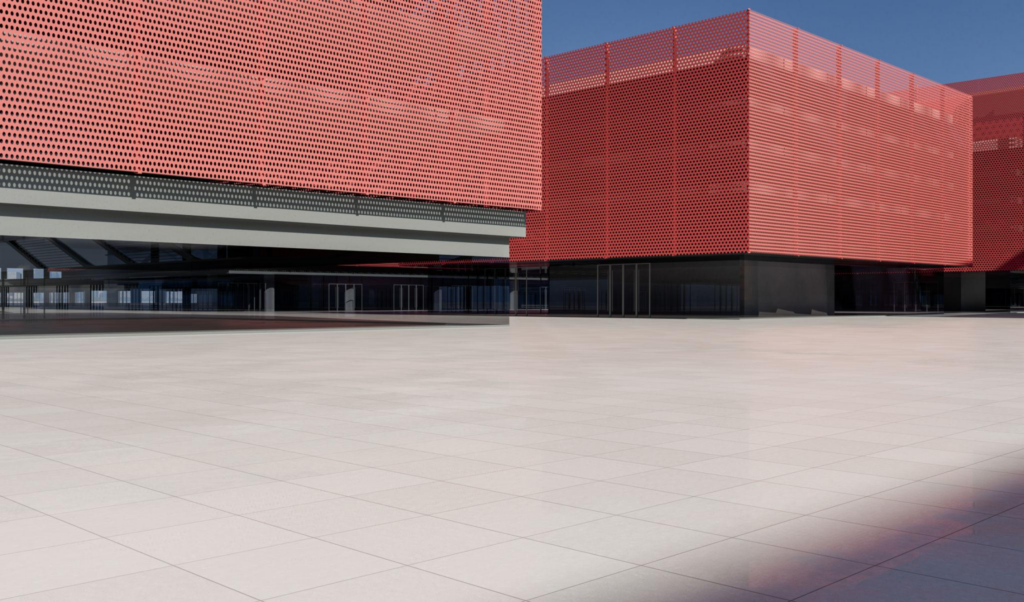
Perforated metal panels or mesh systems create facades that shift in appearance based on light and viewing angle.
From a distance, they appear solid. Up close, they reveal transparency.
These facades are used to:
- filter light
- control visibility
- create layered elevations
They are especially effective in urban projects where privacy and openness need to coexist.
9. Rammed Earth or Earth-Tone Facade
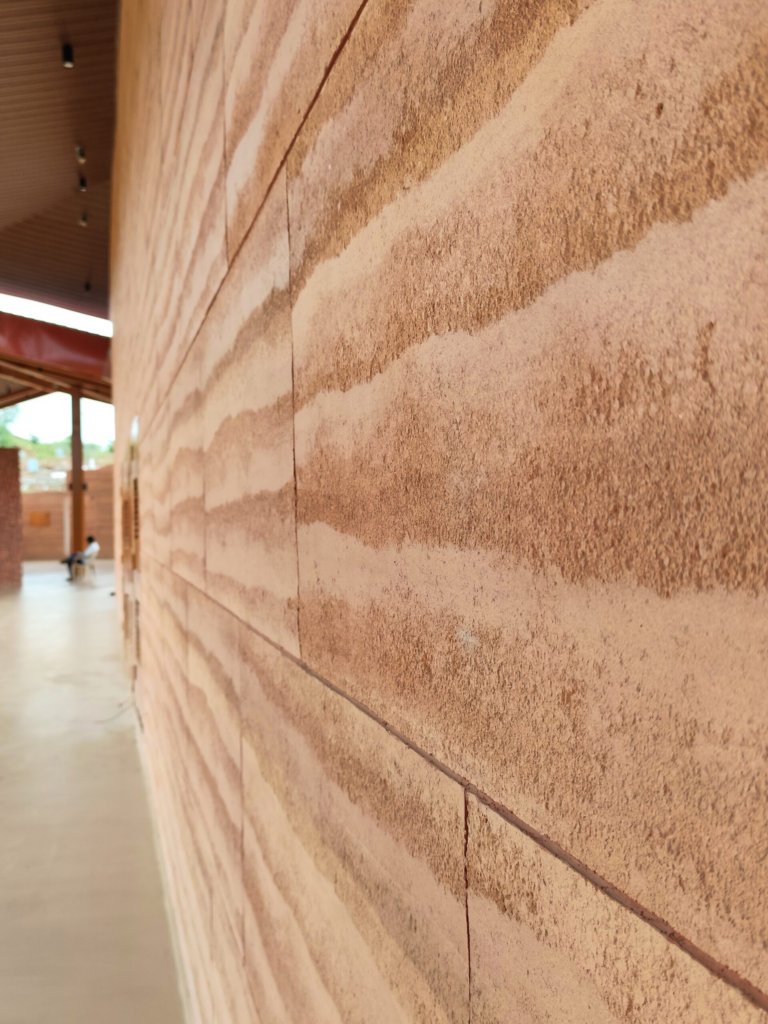
Earth-based facades bring a strong connection to material origin.
Rammed earth walls, or finishes inspired by them, offer:
- warm tones
- layered textures
- high thermal mass
These facades are often used in low-rise residential projects and buildings designed to blend with natural landscapes.
However, traditional methods can be complex to execute, which is why architects often explore modern alternatives that replicate this material expression.
10. Clay and Mineral-Based Facade Finishes
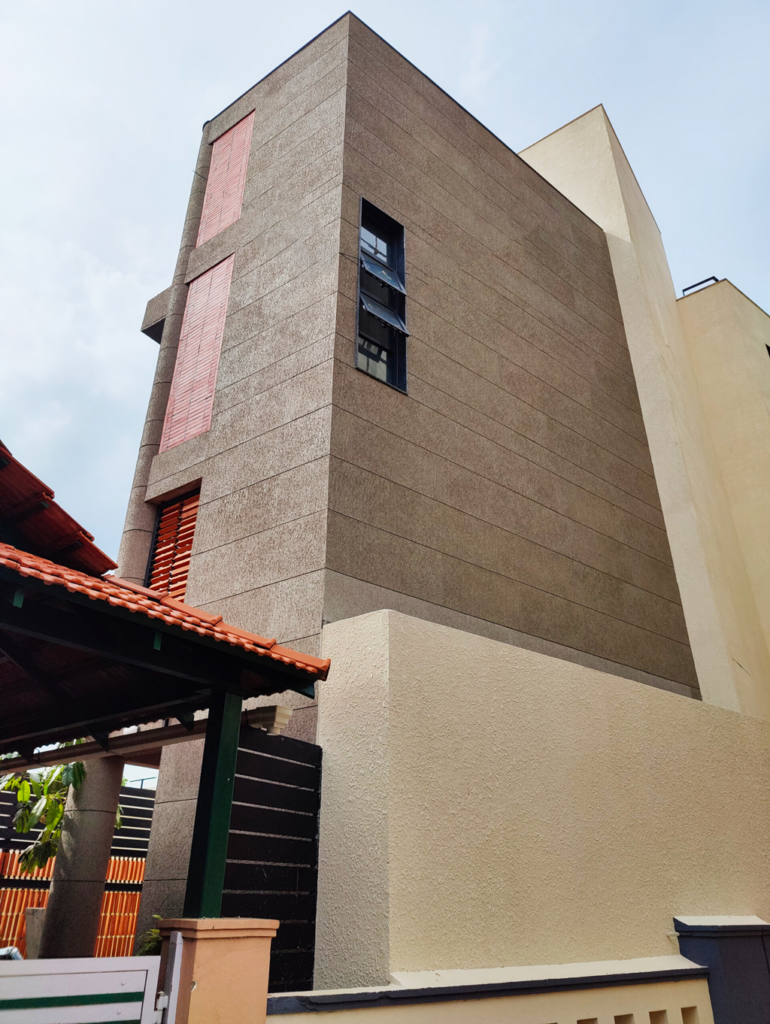
A growing direction in facade design is the use of mineral-based and clay-inspired cladding systems.
These surfaces allow architects to achieve:
- natural textures
- earthy tones
- material depth
without relying on heavy or difficult-to-install materials like stone or rammed earth.
This becomes particularly relevant in projects where:
- weight needs to be controlled
- surfaces are not perfectly flat
- or facade geometry becomes more complex
In such cases, solutions like MCM Cladding (also known as MCM Phomi India) offer a way to achieve stone-like, or textured finishes in a more adaptable format.
Rather than replacing traditional materials, they extend how those material expressions can be used in contemporary architecture.
Final Thought
What defines modern facade design today is not a specific material or style.
It’s the shift from thinking of facades as surfaces — to understanding them as systems that respond, perform, and express at the same time.
The most effective facades are not the ones that follow trends.
They are the ones that resolve:
- climate
- structure
- material behavior
- and design intent
within a single, coherent idea.
Because in the end, the facade is not just what you see first.
It’s what defines how the building works — long after the first impression fades.
Frequently Asked Questions
Modern facade cladding materials, stone cladding, wood cladding, and modified clay cladding systems in contemporary architecture.
Modern facade design ideas focus on combining aesthetics with performance. They include minimalist facades, stone cladding, glass-dominant facades, timber screens, and mineral-based facade cladding systems that respond to climate and material behavior.
Common facade cladding materials include stone, timber, glass, and metal. Modern projects increasingly use modified clay cladding systems as lightweight alternatives to traditional materials.
Facade design defines the building’s identity while improving performance. It impacts thermal efficiency, weather protection, and long-term durability.
A minimalist facade design uses simple geometry, clean lines, and controlled openings. It focuses on proportion, light, and shadow instead of decorative elements.
Stone cladding offers durability, natural texture, and permanence. It is often combined with lighter facade cladding materials to balance weight and cost.
Wood cladding adds warmth and natural appeal to facades. However, it requires maintenance, which is why architects explore alternatives like modified clay cladding.
A glass-dominant facade uses large glazed surfaces to maximize light and views. It is commonly used in modern facade design along with shading systems.
Mineral-based facade cladding systems use natural materials like clay to replicate textures such as stone or wood while offering lightweight construction and flexibility.
Modern facade cladding materials extend traditional materials by improving flexibility, reducing weight, and simplifying installation.
The best modern facade design depends on context. Minimalist facades, stone cladding, and wood cladding are commonly used.